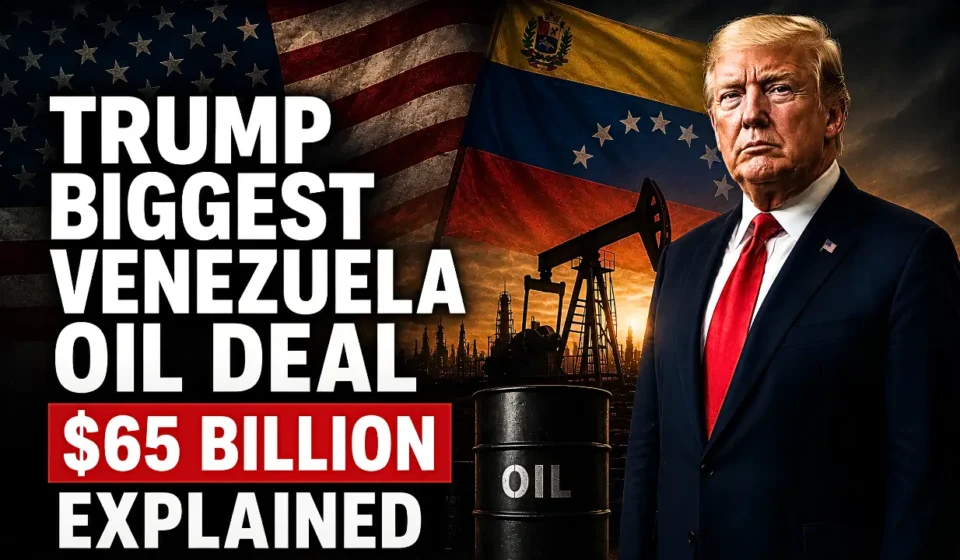

President Trump says a new U.S.-Venezuela oil agreement could give U.S. interests majority control over more than 65 billion barrels of Venezuelan reserves—and lower gasoline prices for Americans. The headline is significant, but drivers should separate a long-term supply deal from an immediate price cut at the pump.
What is the Venezuela oil deal?
According to the announcement described in current reports, the arrangement involves a U.S.-backed partnership with private business and Venezuelan authorities. It reportedly covers 17 oil fields with about 65 billion barrels of proven reserves and could involve major private investment to restore production.
The key word is reserves. Oil reserves are barrels believed to be recoverable economically; they are not barrels that enter the market overnight. Venezuela has enormous crude resources, but much of its oil sector needs investment, equipment, reliable power, functioning pipelines, and refinery upgrades before output can rise substantially.
After Article Read To visit Least News
Will it lower U.S. gas prices?
Not immediately. U.S. gasoline prices respond mainly to crude-oil prices, refinery capacity, seasonal fuel demand, inventories, transportation costs, taxes, and global disruptions.
A Venezuela deal could eventually help if it leads to reliably higher crude production. More supply from the Americas may reduce some market risk and give refiners additional options—especially for heavier crude grades that some U.S. Gulf Coast refineries are designed to process.
However, one project cannot guarantee lower prices nationwide. For example, a driver in Texas and a driver in California can pay very different prices because of state fuel requirements, taxes, refinery logistics, and local supply conditions. Global events can also overwhelm new supply growth.
Why the 65-billion-barrel figure matters
Trump characterized the agreement as a major expansion of U.S.-controlled oil reserves. If the reported structure is confirmed, it would represent access to a large share of Venezuela’s resource base rather than the United States physically acquiring Venezuelan territory or instantly adding 65 billion barrels to U.S. daily supply.
The real test will be the published terms: ownership rights, lease duration, investment commitments, production targets, sanctions treatment, environmental safeguards, and how revenues are shared. Until official agreements and operational details are available, broad claims about costs and output should be treated cautiously.
Potential benefits and concerns
Potential benefits include increased investment, jobs, upgraded Venezuelan infrastructure, and a more diversified regional oil supply. Supporters also argue that a stable Western Hemisphere supply chain could improve energy security.
Critics are likely to question political legitimacy, environmental impacts, the use of foreign-policy leverage, and whether private companies—not consumers—capture most financial gains. Those are reasonable questions because oil deals affect both markets and diplomacy.
The reported Trump-Venezuela agreement could become an important long-term energy development, but it is not a guaranteed shortcut to cheaper gasoline. Watch for official deal documents, realistic production timelines, and refinery-market data before judging its impact. For more context, read a related guide on the factors that actually determine U.S. gas prices.
Does Venezuela have the world’s largest oil reserves?
Venezuela is widely recognized as holding among the world’s largest proven crude-oil reserves. Large reserves do not automatically mean high production, because producing the oil requires capital, technology, infrastructure, and stable operating conditions.
How soon could gasoline prices fall?
Any price effect would likely take months or years, not days. Production must first be restored, transported, refined, and sold into a market shaped by global crude prices.
Who benefits from Venezuelan oil production?
Potential beneficiaries include Venezuelan workers and public finances, private investors, U.S. refiners suited to process heavy crude, and consumers if additional supply meaningfully eases market pressure. The final outcome depends on the deal’s enforceable terms.
Sources
America’s murky deal to secure a fifth of Venezuela’s oil
Trump hails ‘historic’ deal for US to control 65bn barrels of