
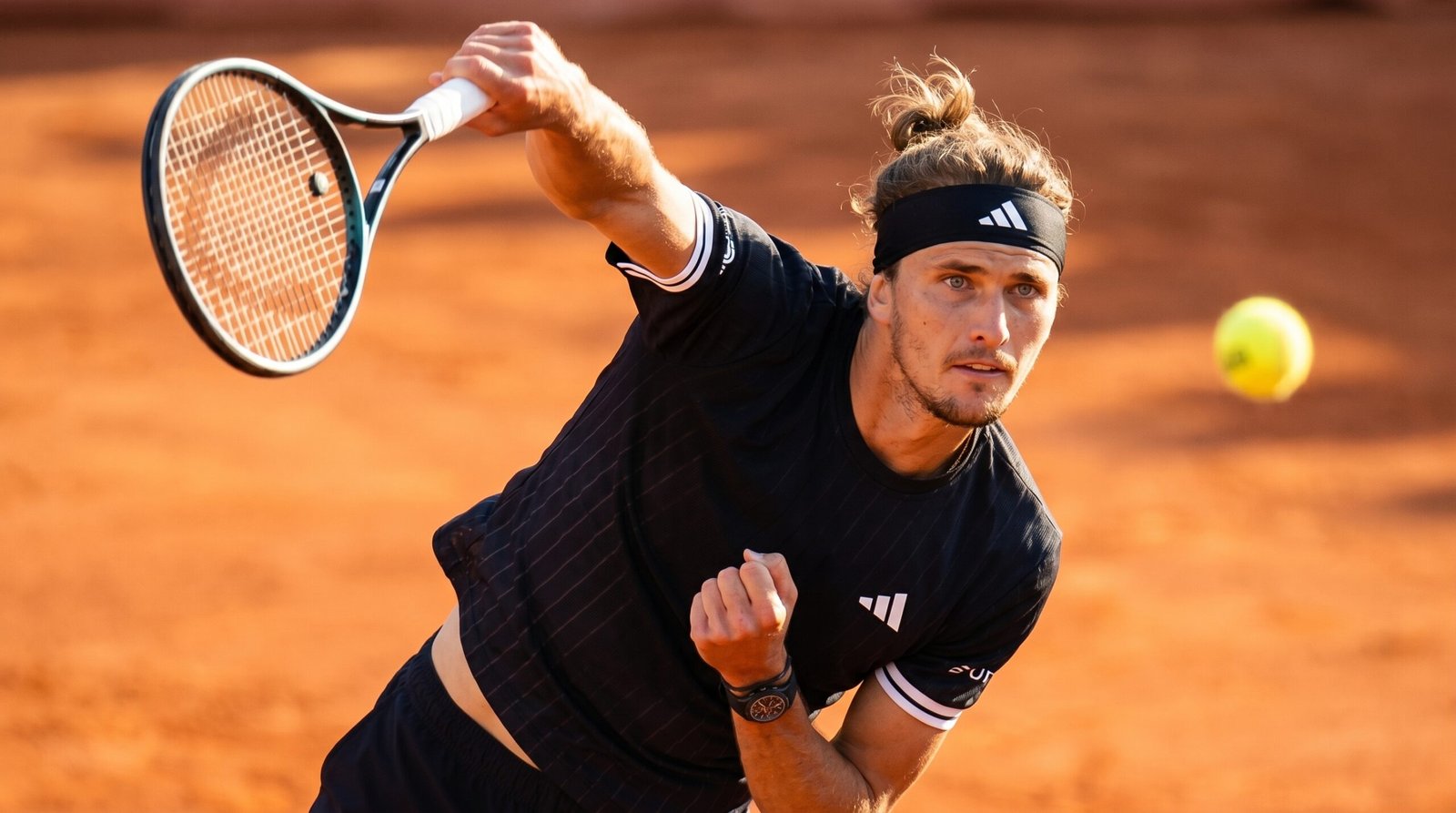
zverev arrives at the French Open 2026 final with something far greater than a trophy at stake—this is a defining moment that could reshape his career narrative, alter the balance of modern tennis, and introduce a new era of Grand Slam champions. Facing him is Italy’s rising force, Flavio Cobolli, a player whose fearless run has disrupted expectations and injected unpredictability into Roland Garros.
A Final That Signals a Shift in Tennis Power
The French Open 2026 has not followed the expected script. With early exits from dominant figures like Novak Djokovic and Jannik Sinner, and Carlos Alcaraz sidelined, the tournament opened into a rare opportunity. What emerged is a final between two players who represent different trajectories in modern tennis.
Alexander Zverev, often called Sascha Zverev, is no stranger to pressure. This marks his fourth Grand Slam final, and arguably his most important. At 29, the German has spent years hovering just below greatness, repeatedly halted at the final hurdle.
Flavio Cobolli, on the other hand, embodies the unexpected. The 24-year-old Italian has never reached this stage before. His rise during this tournament reflects not just skill, Try new article in blog full read and after Scottie Scheffler Memorial Tournament but timing—capitalizing on a disrupted draw and playing aggressive, confident tennis when it mattered most.
Zverev’s Moment of Truth
Zverev’s journey to the Roland Garros final is not just about form—it is about redemption. His past in Grand Slam finals tells a complicated story.
- Lost after leading by two sets at the 2020 US Open
- Fell short against Carlos Alcaraz at the French Open 2024
- Beaten by Jannik Sinner at the Australian Open
- Entered French Open 2026 as one of the most experienced contenders
These losses have created a narrative around Zverev: a player with elite ability but fragile moments under pressure. However, this year feels different.
He has moved through the draw with composure, showing tactical maturity on clay. More importantly, he appears mentally steadier, focusing on execution rather than expectation.
Facing Cobolli, Zverev also benefits from experience—something his opponent lacks at this level.
Cobolli’s Rise: More Than a Cinderella Story
Calling Cobolli’s run a “surprise” undersells his development. The Italian has been steadily improving, with strong performances in Munich and Madrid earlier in the season.
What makes his French Open campaign unique:
- Aggressive baseline play suited for clay
- Ability to absorb pressure and counterattack
- Mental freedom with no expectations
- Tactical adaptability against higher-ranked opponents
- Physical freshness after a semifinal walkover
Cobolli tennis is built on instinct and rhythm. Unlike Zverev, he is not burdened by past failures. That psychological freedom could become a decisive factor in the final.
Zverev vs Cobolli: A Rivalry in the Making
The zverev vs cobolli matchup has quietly developed into an intriguing rivalry.
- Head-to-head: Zverev leads 3–1
- 2026 meetings: Split wins (Munich – Cobolli, Madrid – Zverev)
- Previous French Open meeting: Zverev won in straight sets
- Playing styles: Zverev’s power vs Cobolli’s agility
This balance adds unpredictability. Cobolli has already proven he can beat Zverev on clay, which removes any psychological intimidation.
At the same time, Zverev’s ability to adapt across matches gives him a strategic edge in longer formats like a Grand Slam final.
Why This French Open Final Matters
This is not just another match—it reflects a transitional moment in tennis.

Big Facts
- First-time Grand Slam winner guaranteed
- Absence of dominant champions reshaped competition
- Rise of new contenders outside the traditional top tier
- Increased competitiveness across ATP rankings
- Roland Garros continues to reward clay specialists over pure power

Negative Factors
- Zverev’s past struggles in Grand Slam finals
- Cobolli’s lack of experience at this level
- Mental pressure could affect match quality
- Physical fatigue if the match extends to five sets
- Inconsistency during crucial break points
The Pressure Factor: Advantage Zverev or Cobolli?
Pressure works differently for both players.
Zverev carries expectation. He is the favorite, the experienced finalist, and the player many believe “should” win. That can either sharpen focus or trigger past doubts.
Cobolli carries opportunity. For him, this is a chance to accelerate his career overnight. Without history weighing him down, he can play freely.
In high-stakes tennis, mental dynamics often outweigh technical skill.
Tactical Breakdown of the Match
From a tactical standpoint, the match will likely hinge on a few key areas:
- Zverev’s serve consistency under pressure
- Length and control of baseline rallies
- Cobolli’s ability to dictate tempo early
- Physical endurance in long exchanges
- Handling momentum swings
If Zverev controls rallies and limits errors, he should win. If Cobolli disrupts rhythm and keeps points unpredictable, the match could shift in his favor.
Top 5 Positives Shaping the Final
- Zverev’s experience in high-pressure matches
- Cobolli’s fearless mindset and attacking style
- Balanced head-to-head record adds unpredictability
- Clay surface suits both players’ strengths
- Open draw creates a genuine opportunity for history
The Role of Friendship in Elite Competition
An interesting subplot is the personal relationship between the players. Zverev and Cobolli developed a friendship through shared experiences, including the Laver Cup.
However, professional tennis rarely allows sentiment to interfere with ambition. At this level, friendship becomes secondary to legacy.
This dynamic reflects a broader trend in modern tennis: players are closer off-court, but just as ruthless on it.
What Happens Next for the Winner?
The outcome of this roland garros final will have lasting consequences.
If Zverev wins
- He secures his first Grand Slam title
- Ends years of criticism about his mental strength
- Establishes himself among the elite of his generation
- Gains confidence heading into future majors
If Cobolli wins:
- Announces himself as a new force in tennis
- Joins the list of unexpected Grand Slam champions
- Shifts Italy’s tennis narrative beyond Sinner
- Gains immediate global recognition
Future Implications for Tennis
The French Open 2026 could mark the beginning of a new competitive era.
With established stars facing injuries or inconsistency, the door is opening for players like Cobolli. At the same time, veterans like Zverev are fighting to claim overdue success before the next wave fully takes over.
This intersection of opportunity and urgency makes the current landscape one of the most compelling in recent years.
Final Thought
The cobolli vs zverev final is more than a match—it is a collision between experience and emergence, pressure and freedom, expectation and possibility.
For Zverev, it is about finally becoming the champion many predicted.
For Cobolli, it is about becoming something no one expected.
Either way, Roland Garros 2026 will produce a first-time winner—and potentially, the start of a new chapter in tennis history.